Fire and Fragility: A Morning at Wave Murano
As promised—because I am nothing if not a man who keeps his word to friends & internet strangers alike—I now turn to Murano, fire, molten glass, and the sort of patience required to tolerate other people’s children in enclosed cultural spaces.
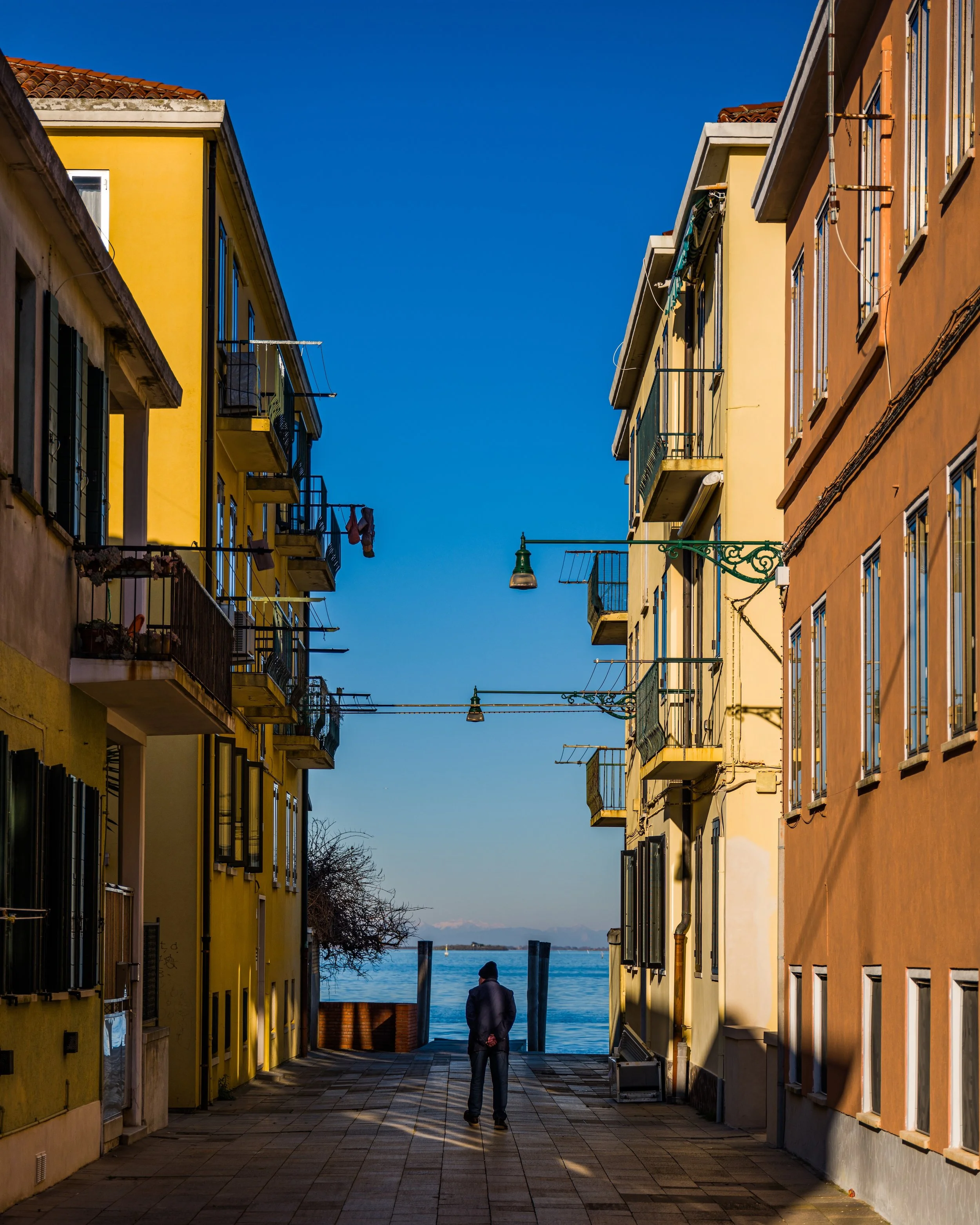
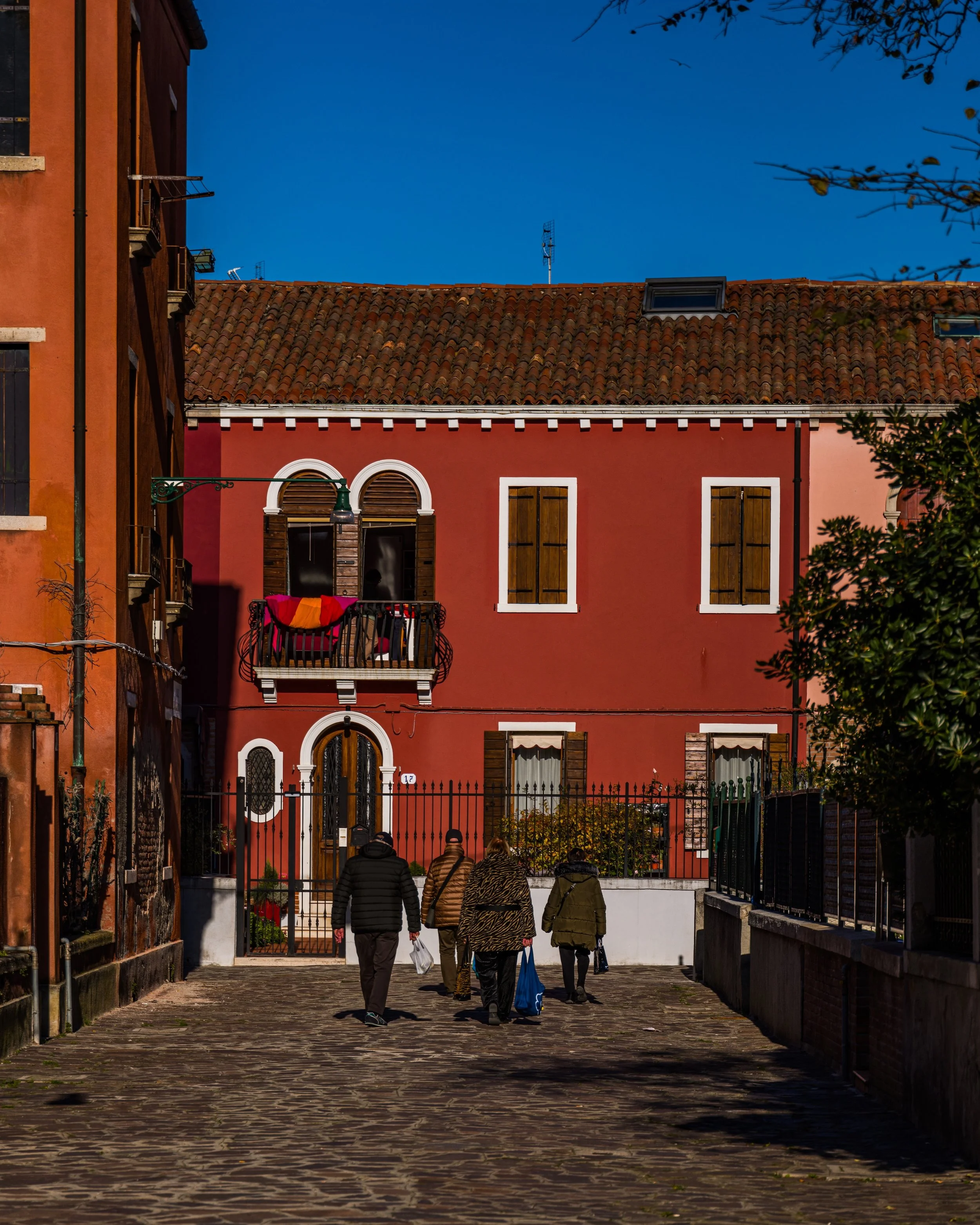
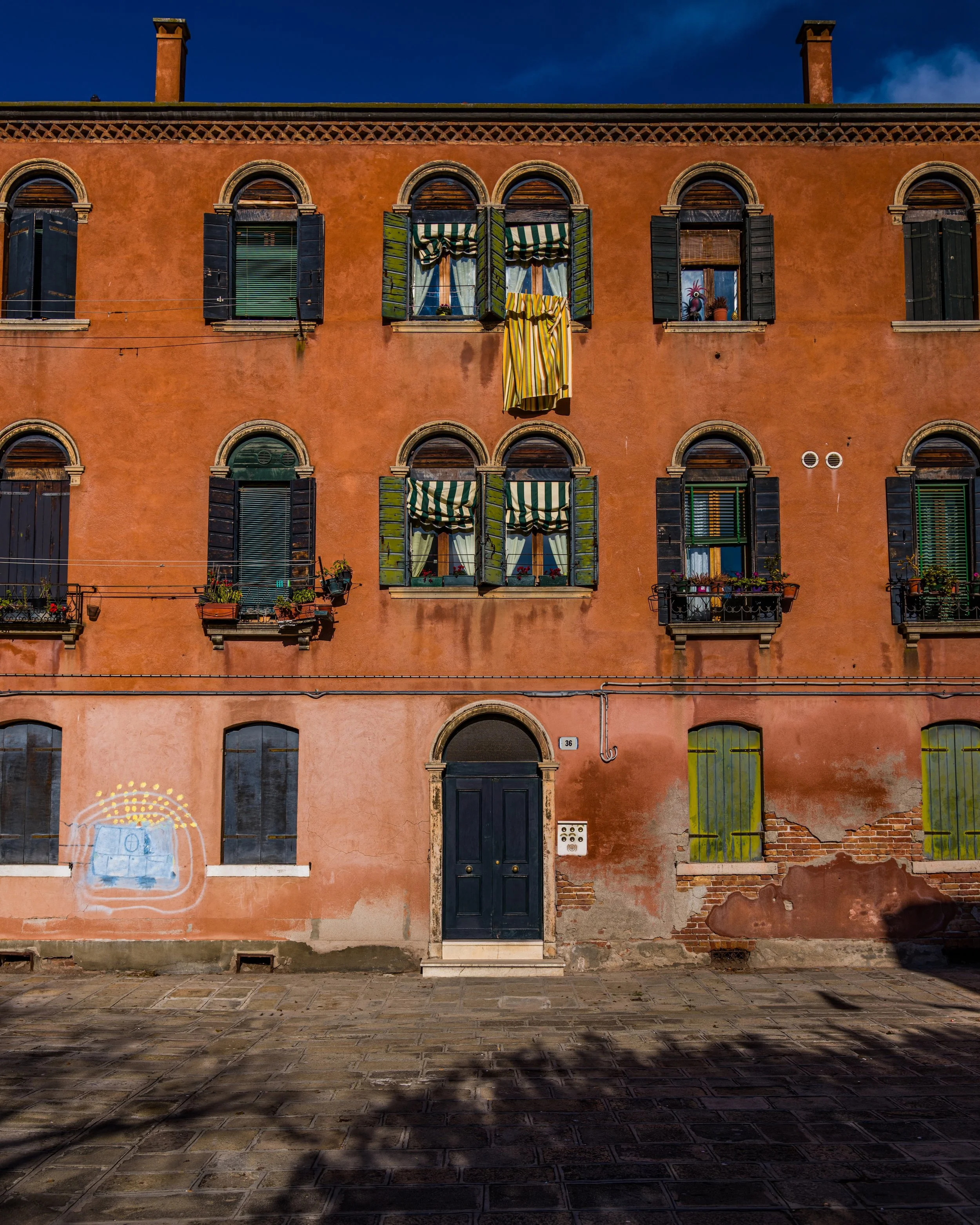
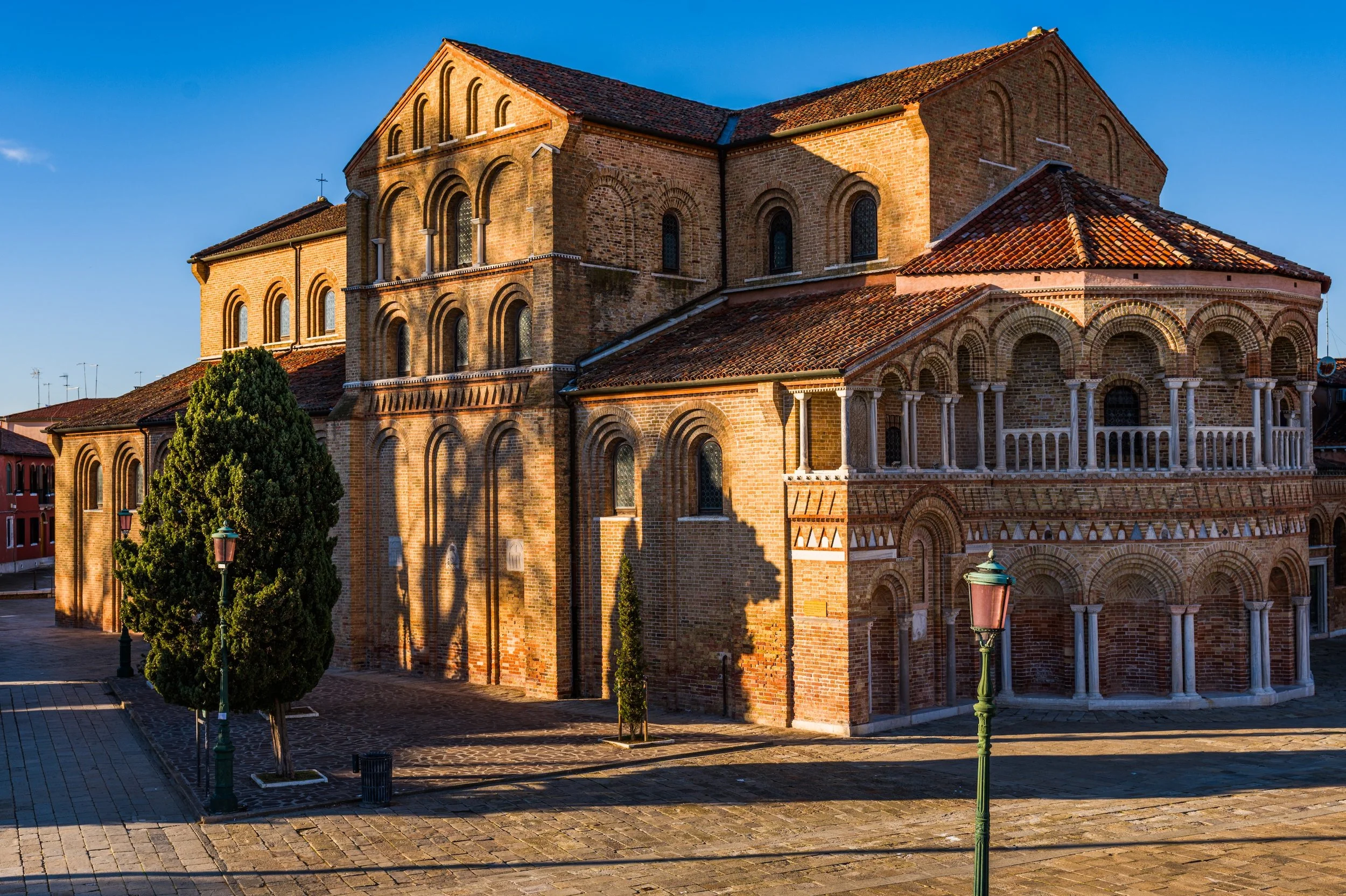
Murano, for those who only know Venice as a series of gondola selfies and mild wallet trauma, is an island devoted almost entirely to the act of turning sand into objects you immediately decide you cannot afford but desperately need. Glassmaking here is not a novelty or a tourist gimmick. It is the island’s bloodstream. The furnaces have been burning for centuries, and the skills passed down are older than many countries, several religions, and most modern attention spans.
Which brings us neatly to Wave.
The Early Visit: A Strategy, Briefly Successful
My wife, whose organizational skills vastly outstrip my own, booked us into the first visit of the day at Wave Murano. This was a tactical decision. Early mornings tend to attract people who are genuinely interested in craftsmanship, history, and learning—rather than those who believe cultural experiences should come with a juice box and a charging cable. For a glorious few moments, it appeared her plan had worked.
The group was small. Manageable. Civilised. Then, just before the door closed, in swept an older father and his hyperactive son from New York City, announcing themselves with the volume and confidence of people who assume the world is relieved they’ve arrived. Within seconds, it became clear that the child—let’s call him Junior—had discovered the iPhone would not be available to him for the next hour. The device that had apparently raised him, educated him, soothed him, and likely taught him to speak was now gone. This revelation triggered a meltdown of such operatic intensity that Pavarotti himself would have requested a quiet word.
The father, exhausted in that uniquely modern way—where defeat has fully settled into the shoulders—made no attempt to intervene. No whisper. No warning. No suggestion that perhaps shrieking at ancient glass furnaces might not be appropriate. He simply stood there, hands in pockets, staring into the middle distance like a man already consumed by what solo holiday he would be planning on the flight home. At this point, I couldn’t help but think that both would have been better served using the weekend to visit Rikers Island Jail, as a sort of foreshadowing exercise for Junior. Just an educated guess on my part. Cultural enrichment comes in many forms. But Murano, bless it, endures.
Wave: New Blood in an Ancient Art
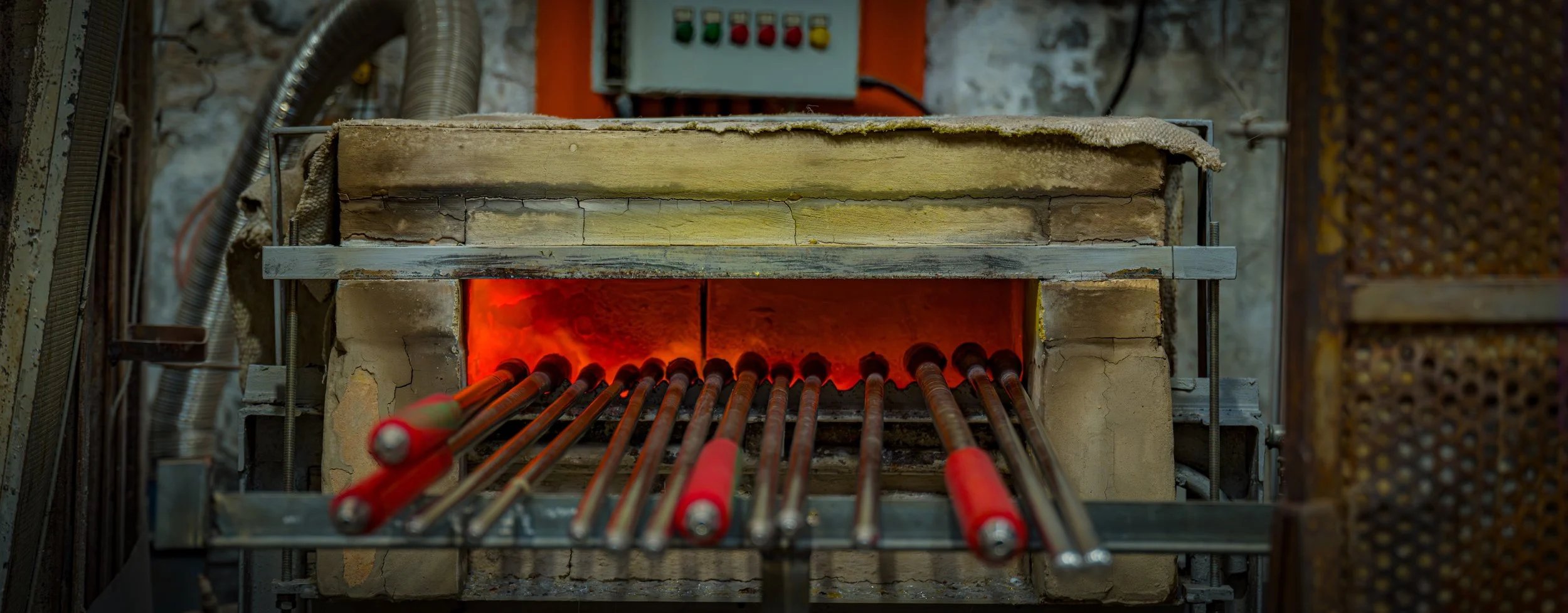
Wave is one of the newest glass factories on Murano, and that alone makes it interesting. In a place where tradition is everything, new can be a dirty word. Yet Wave manages to feel respectful without being reverential, progressive without being performative. Founded only a few years ago by a PhD physicist who looked at centuries of glassmaking tradition and thought, Yes, but surely we can do this without setting the atmosphere on fire, Wave is the rare thing: a workshop that honours the past while actively engineering a future. This is not easy. Murano glassmaking relies on furnaces that burn at temperatures approaching the surface of the sun. Historically, sustainability was not high on the list of concerns—right up there with “indoor air quality” and “not shortening your lifespan dramatically.”
Wave has tackled this head-on. They have developed advanced burner systems that dramatically reduce fuel consumption while maintaining the precise temperatures required for high-quality glass. Heat recovery systems capture and reuse energy that would otherwise be wasted. Emissions are reduced. Efficiency is increased. And all of this without compromising the clarity, colour, or structural integrity of the glass. In other words, they are proving that tradition and innovation are not enemies—just deeply suspicious neighbours.
Marco: The Calm in the Molten Storm
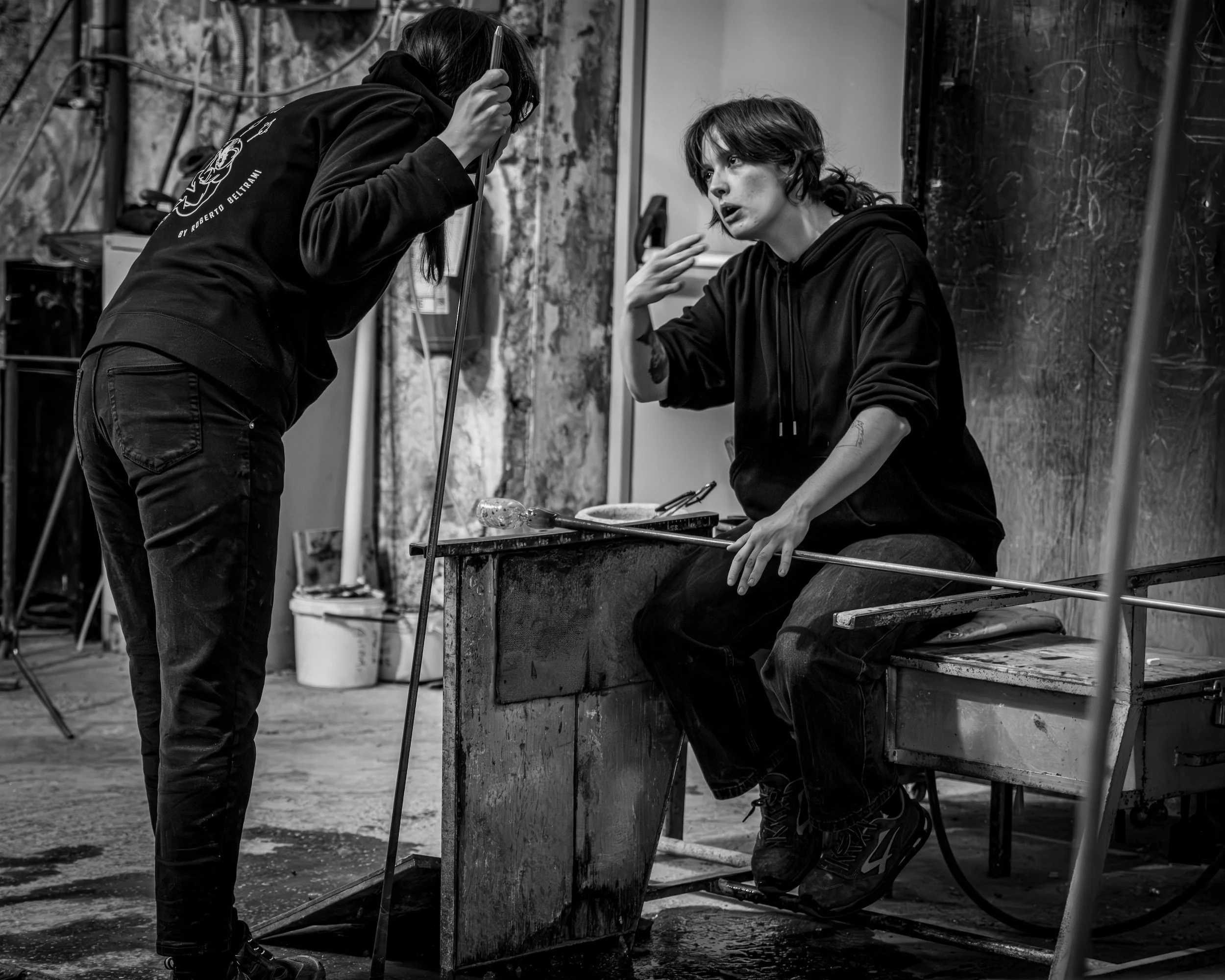
Our guide was a young man named Marco, who possessed two invaluable qualities: deep knowledge and a voice calm enough to gently deflect the sonic assault happening two metres to his left. Marco walked us through the history of Murano glassmaking, explaining how techniques evolved from medieval trade secrets guarded on pain of death to modern artistic expressions collected by museums and obsessives with well-appointed living rooms. He spoke about the materials—the silica, the minerals used for colour, the delicate balance between temperature and timing. He explained how certain techniques require muscle memory passed down over decades, while others are being reimagined entirely using modern physics and materials science.
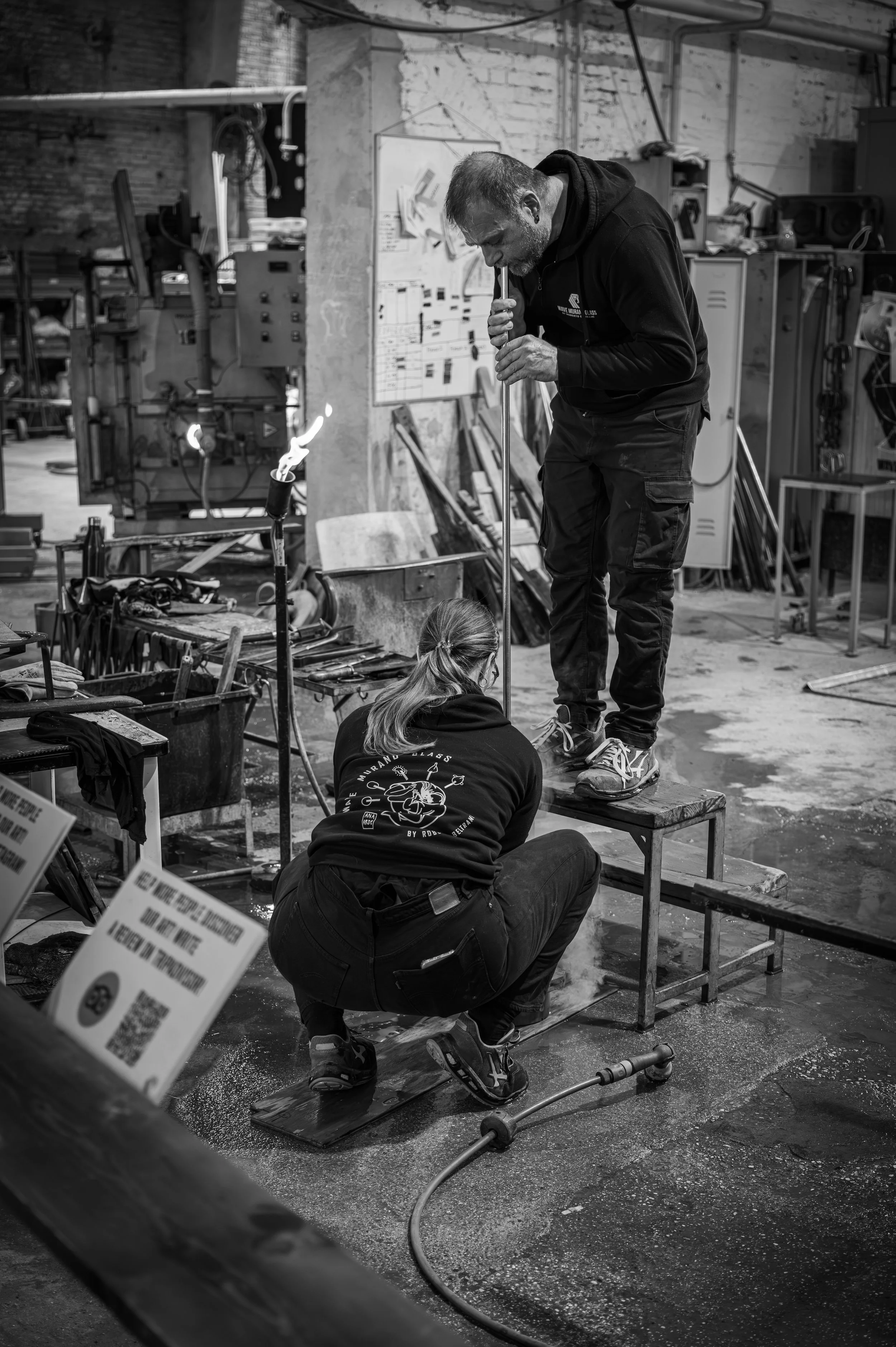
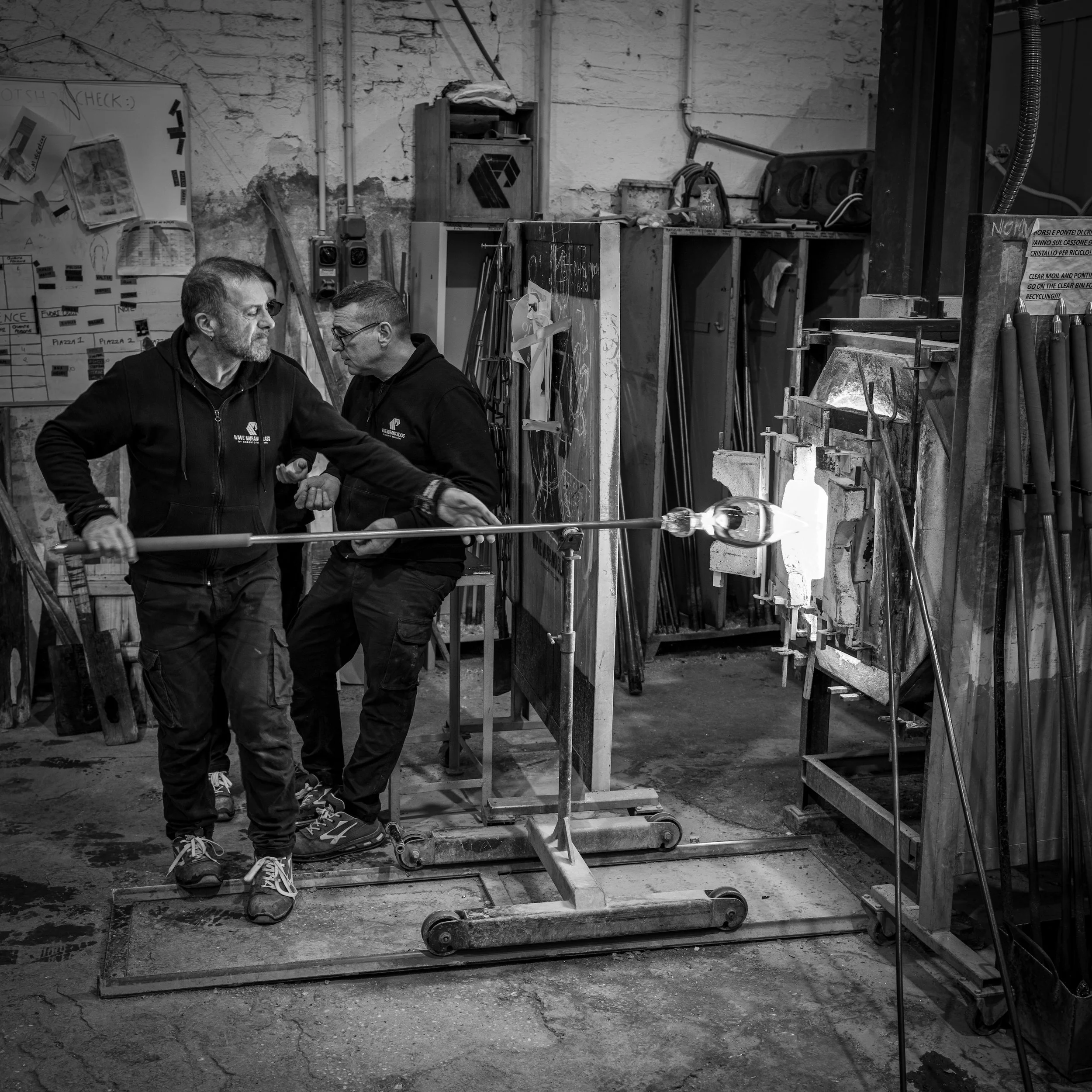
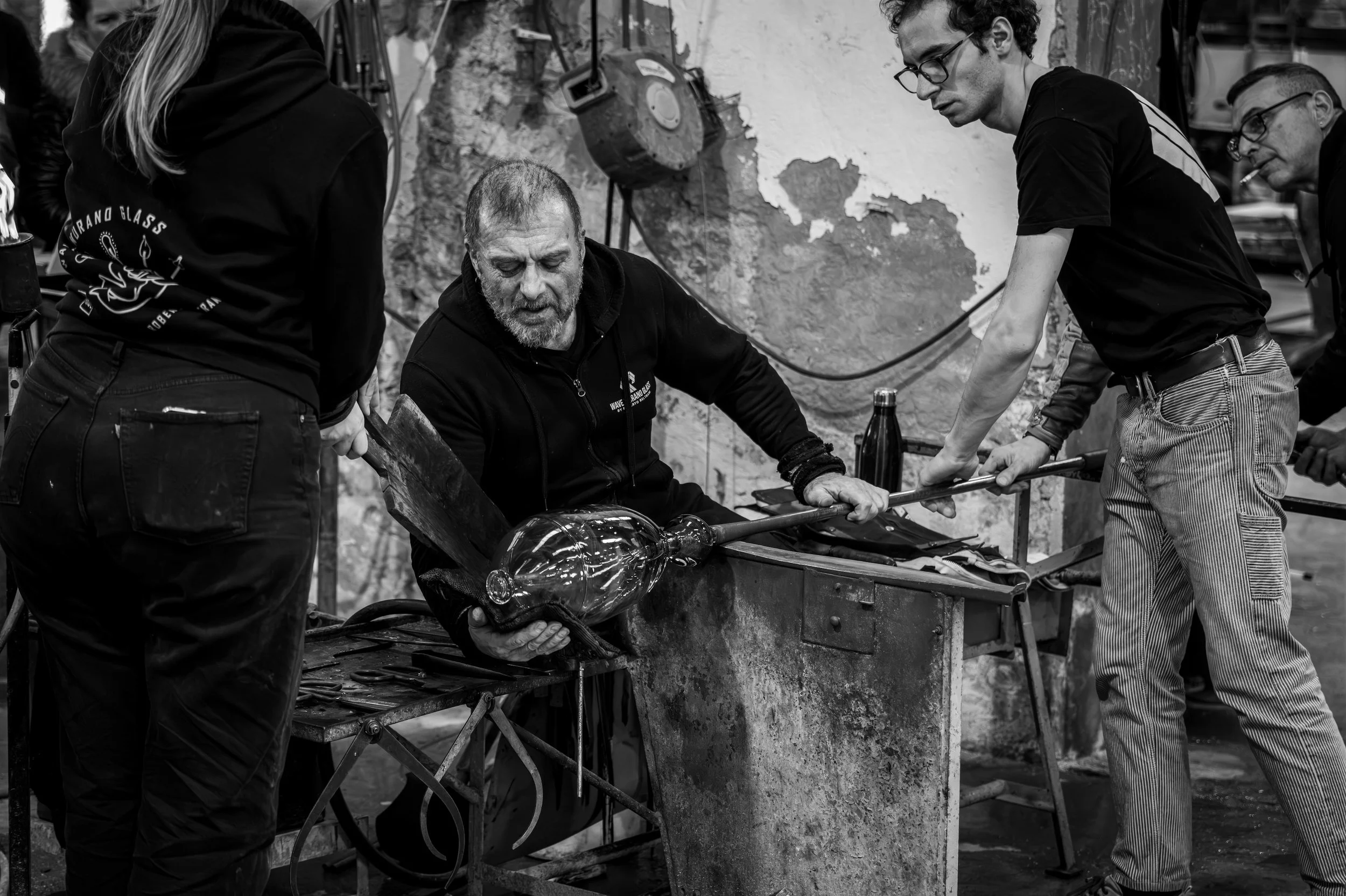
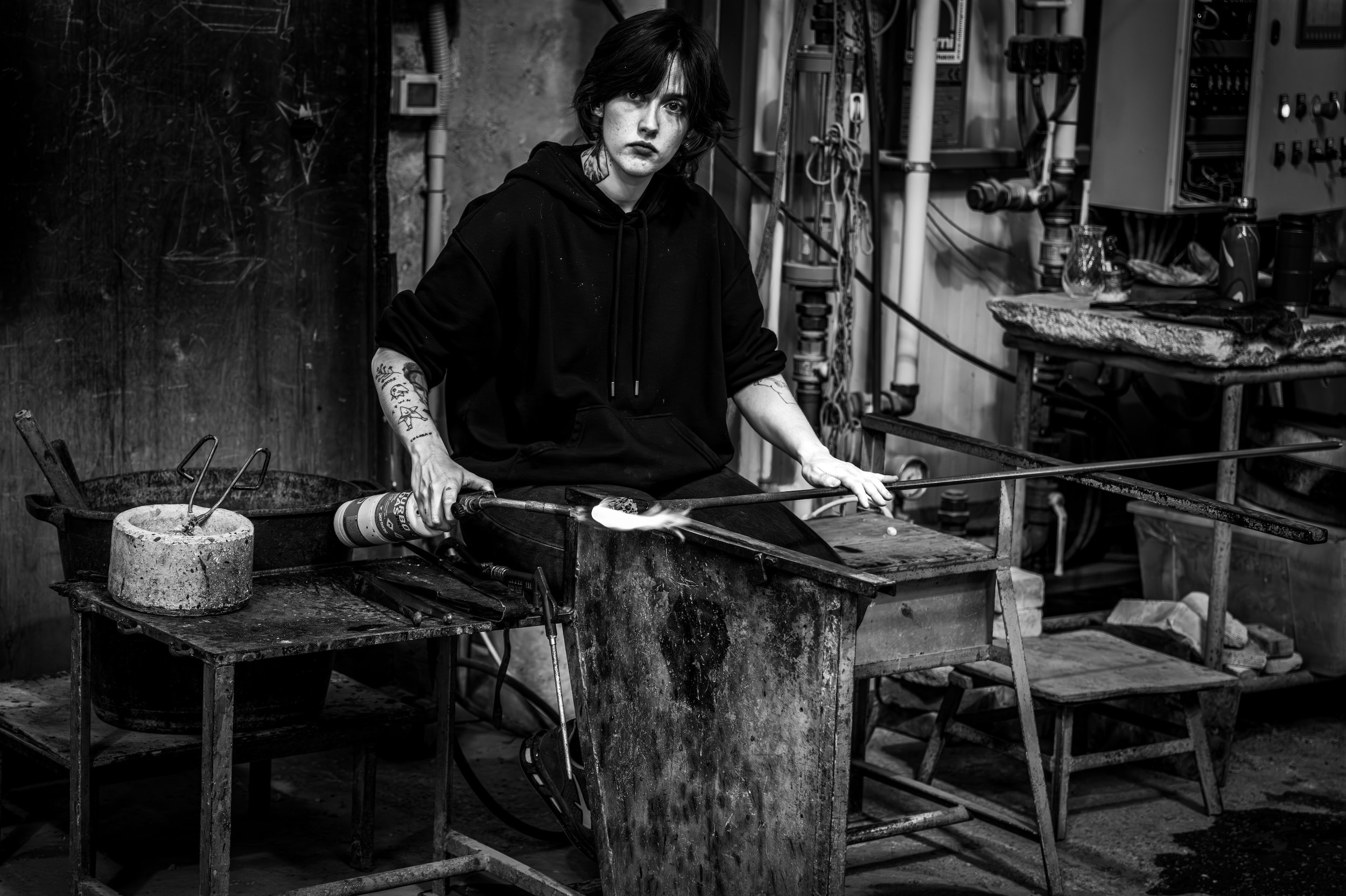
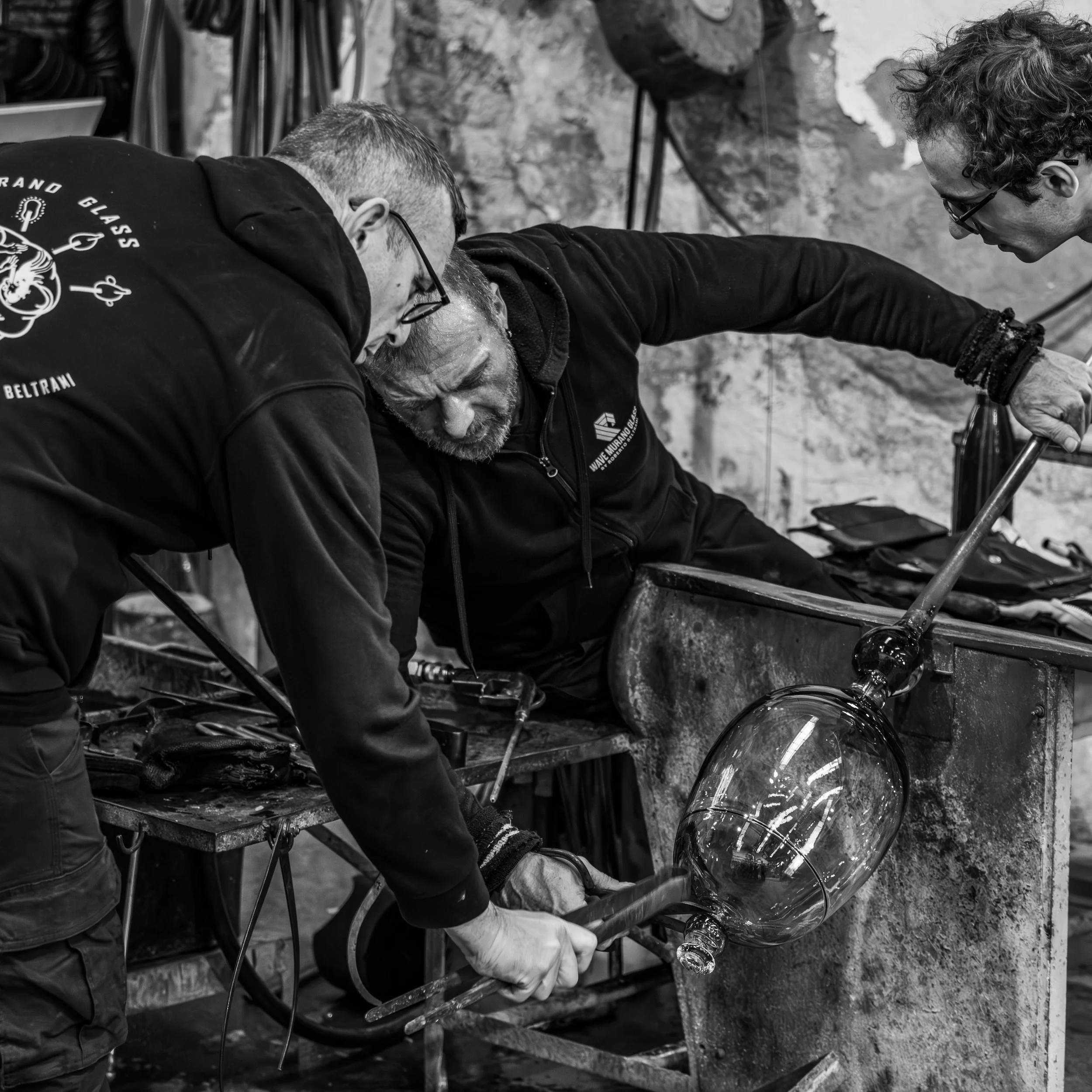
What stood out most was his pride—not just in the finished objects, but in the process. The idea that glassmaking is not a solo pursuit but a choreography. One person gathers molten glass, another shapes, and another refines. Young and old artisans working together, men and women equally represented on the shop floor, all essential to the outcome. This is not a factory in the industrial sense. It is a living organism.
The Artisans: Fireproof, Focused, and Unfazed
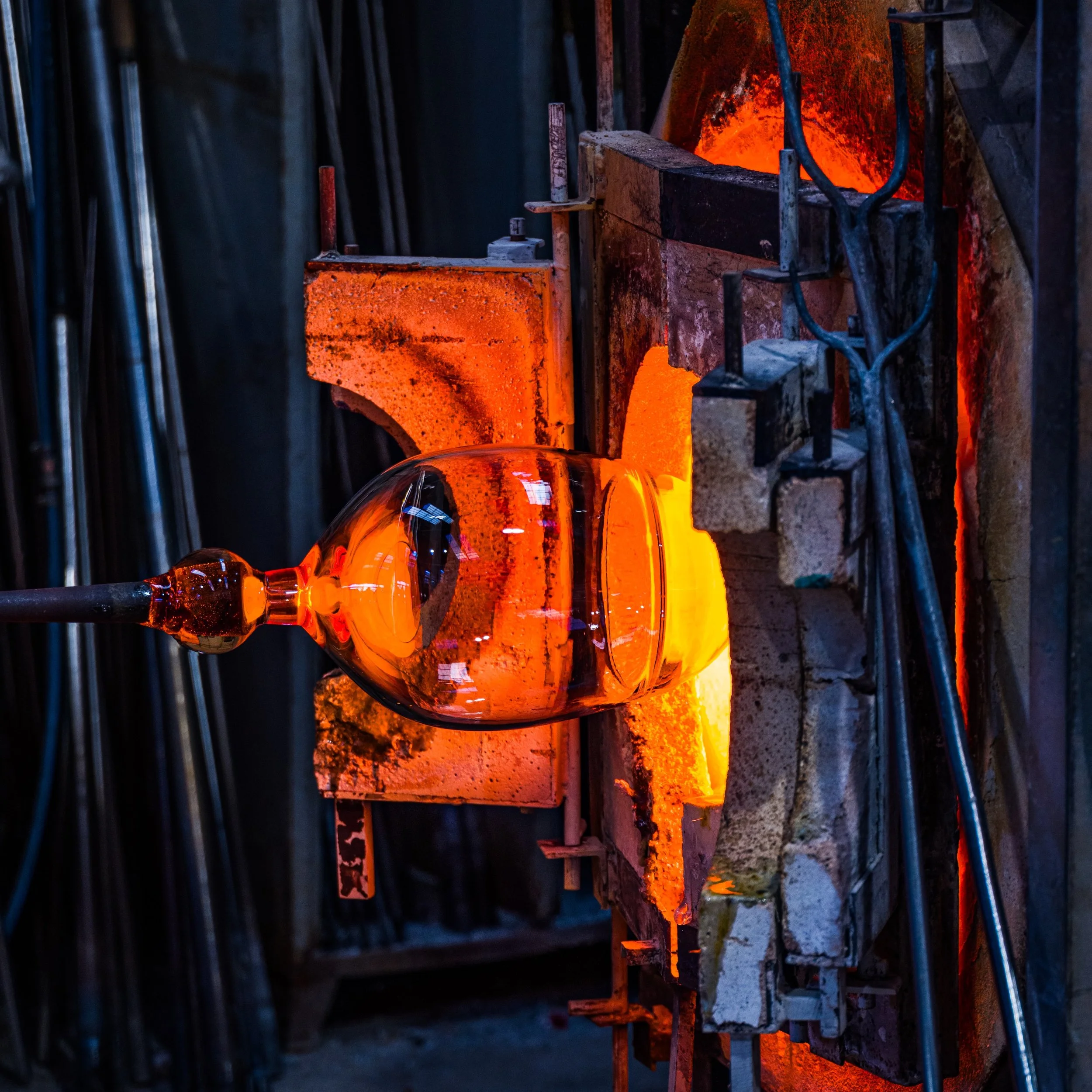
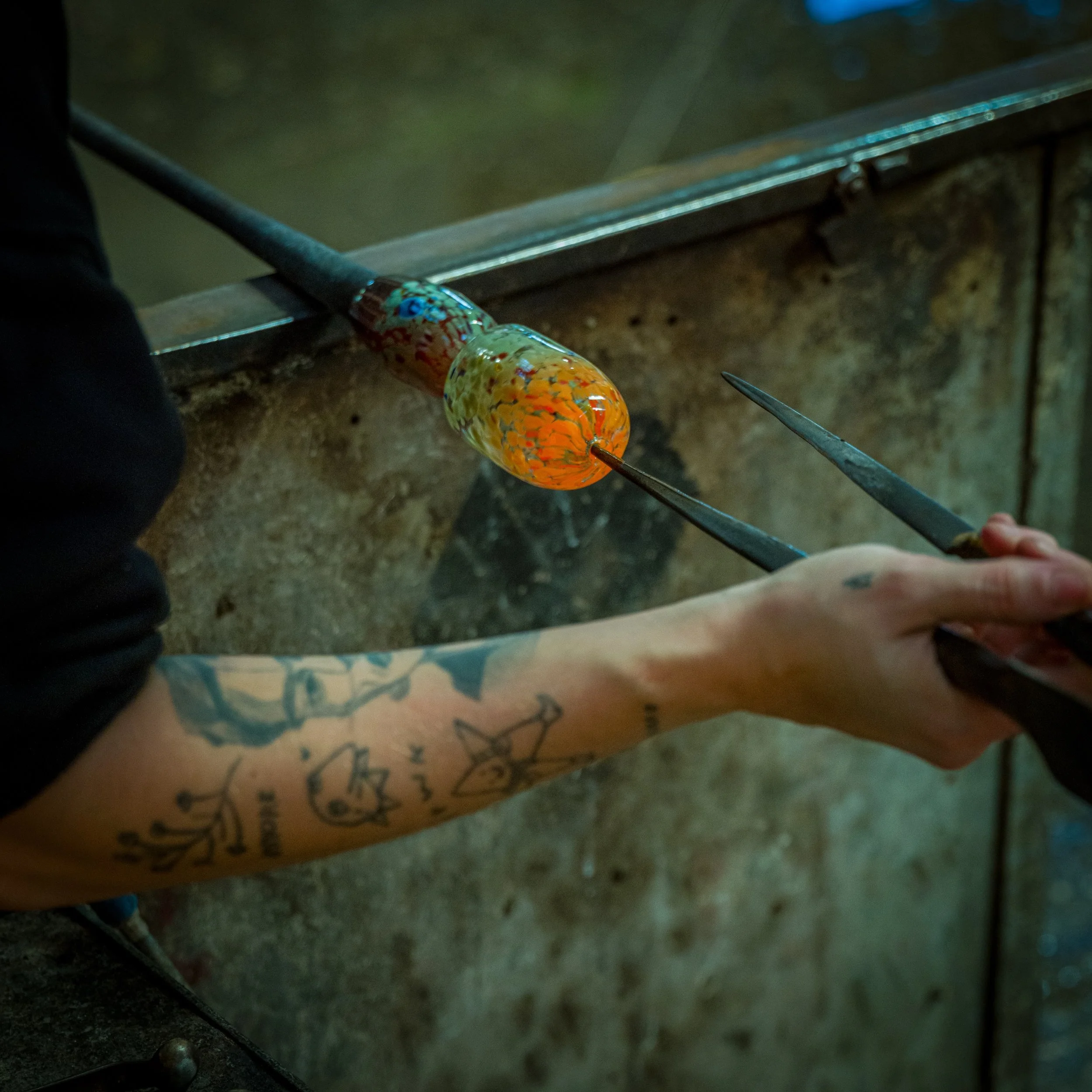
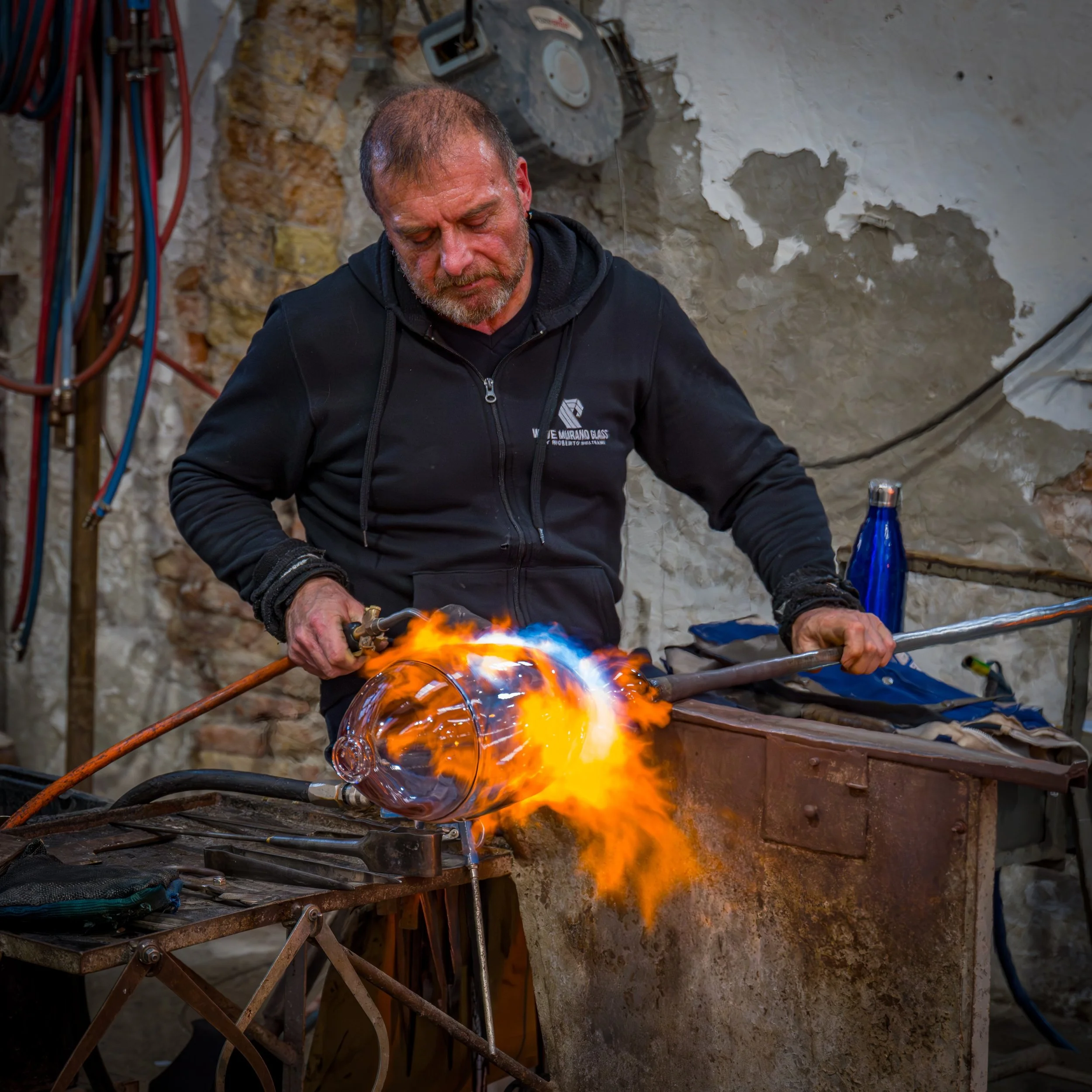
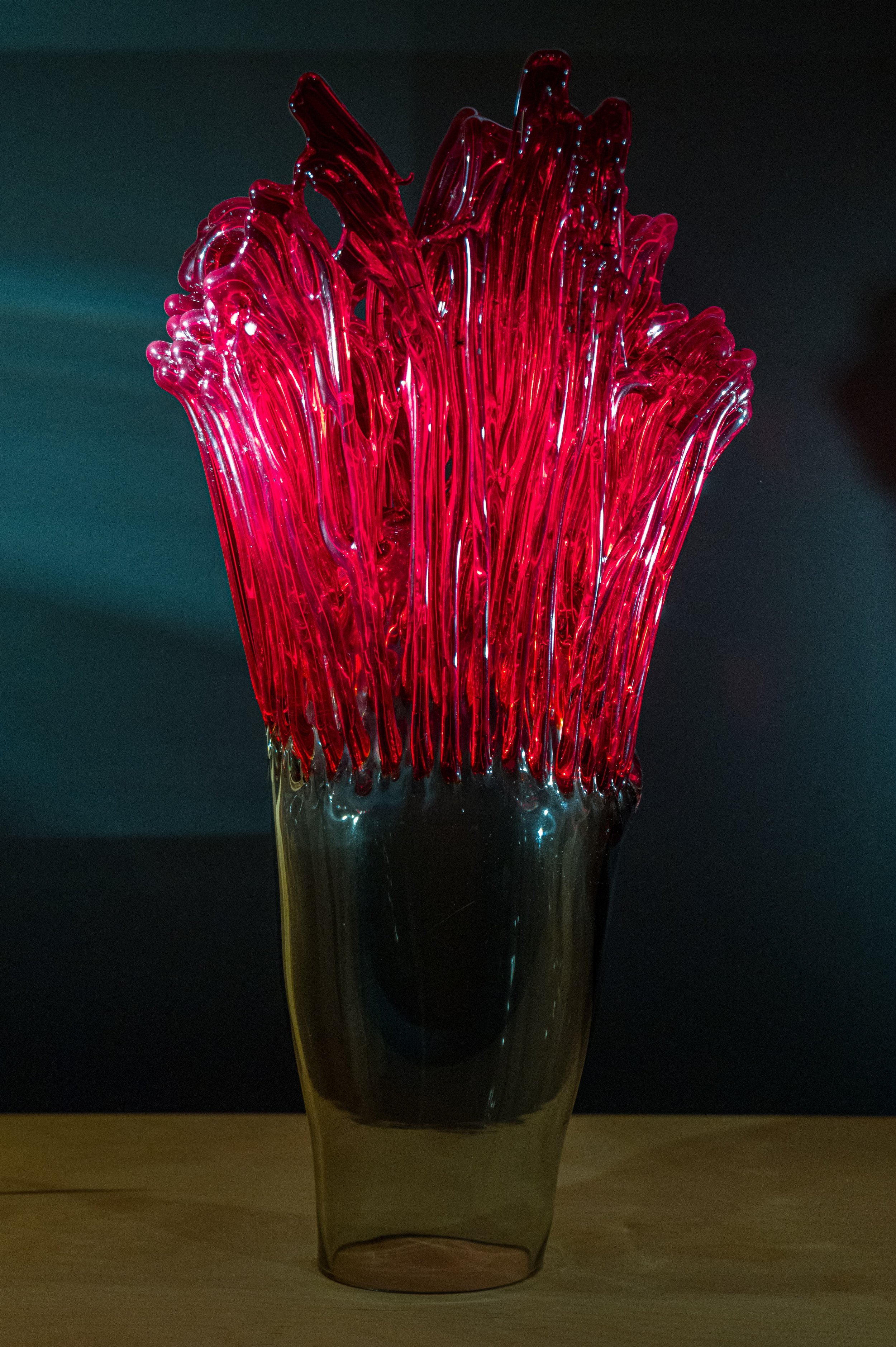
Watching the artisans work is mesmerizing. They move with the quiet confidence of people who know that one wrong move could result in severe burns, lifelong scarring, or a very awkward conversation with HR. Molten glass glows like captured sunlight. It bends, stretches, and responds to breath in ways that feel almost alive. The artisans read it instinctively—when to twist, when to cool, when to return it to the furnace for another pass.
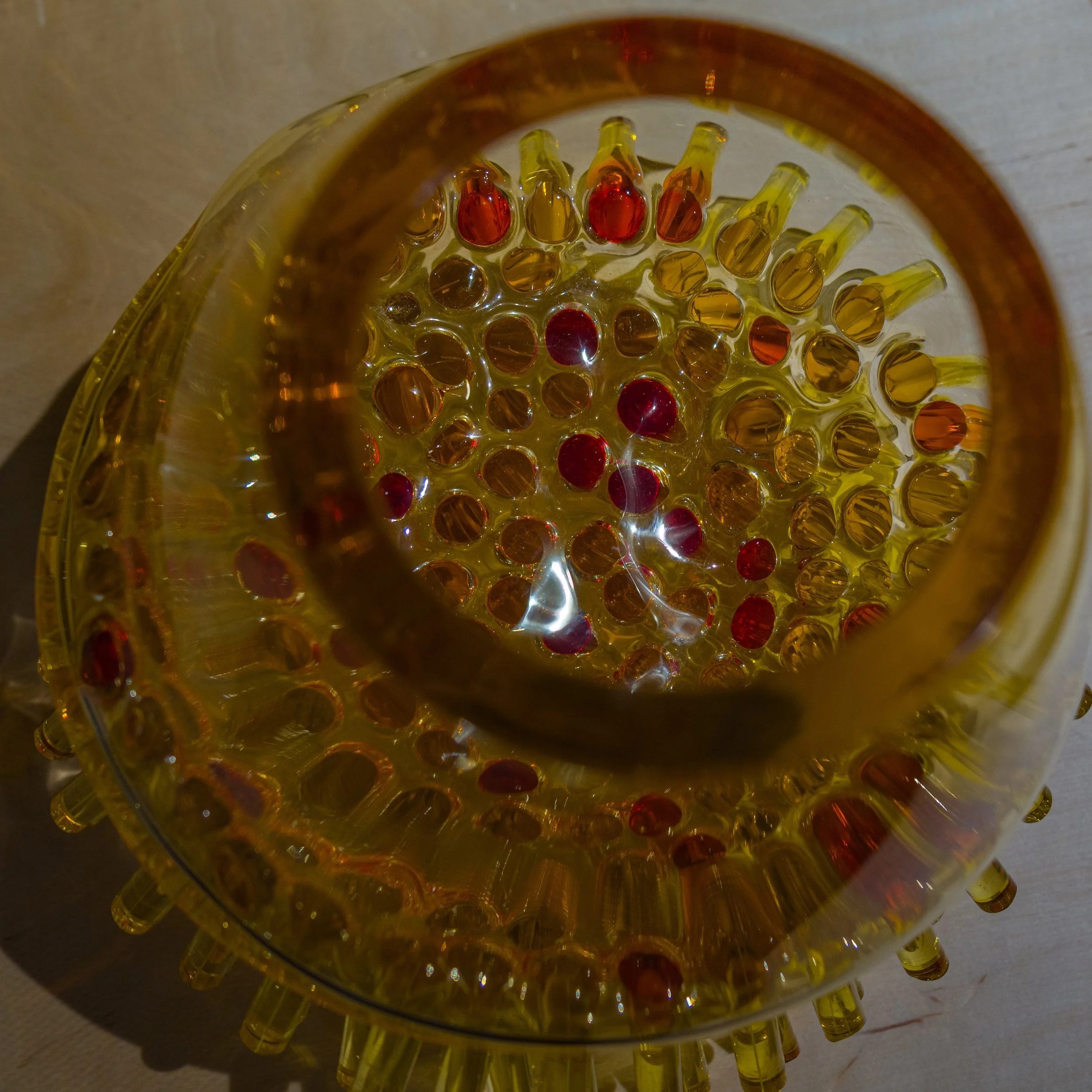
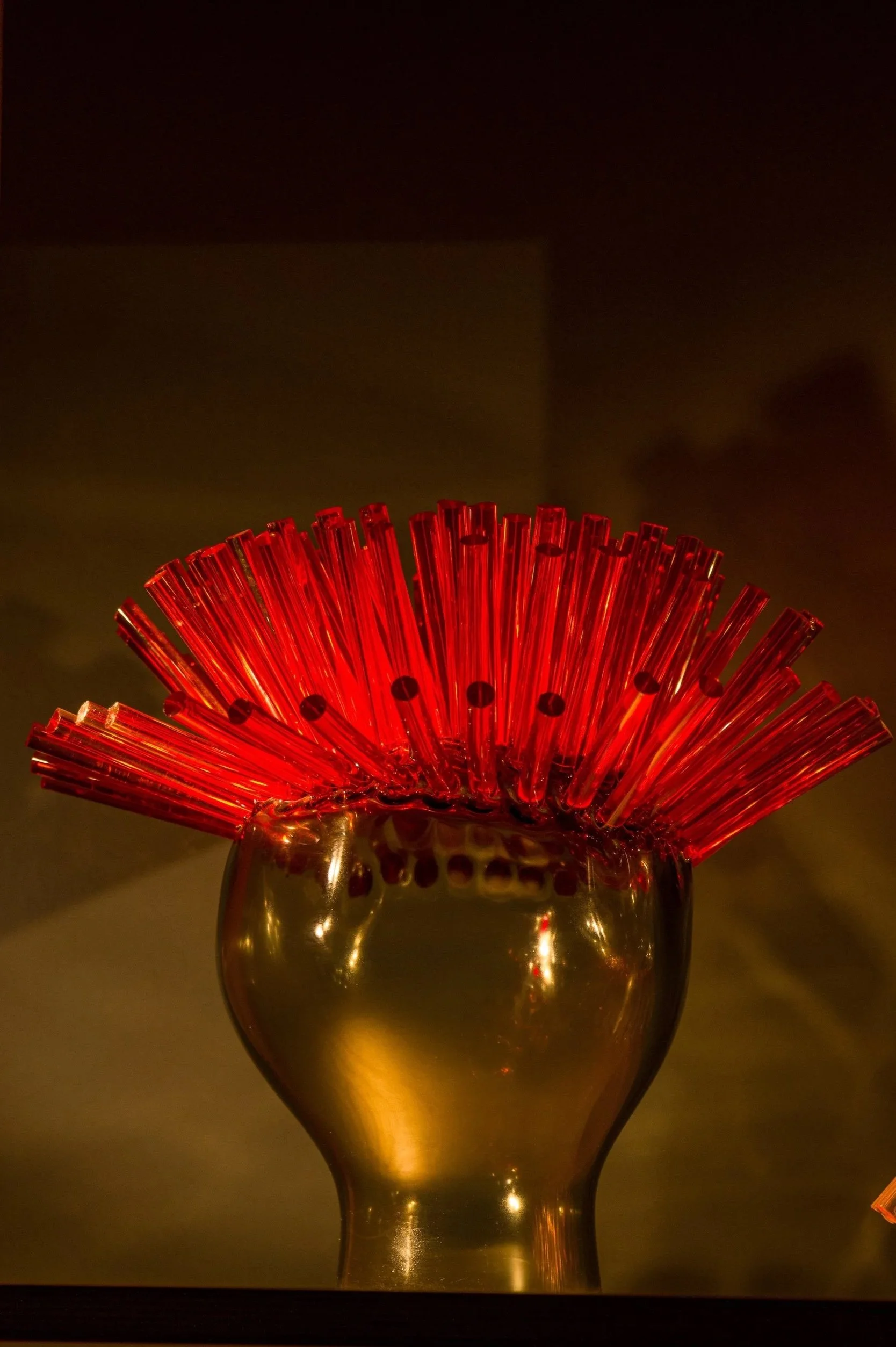
Despite the chaos of the environment—heat, noise, the occasional child shriek—they remain focused. Calm. Precise. You get the sense that they could continue working even if Venice itself finally slipped beneath the lagoon. The finished pieces are elegant without being fussy. Modern without being cold. They look like objects designed by people who care deeply about both form and restraint. Which is rare.
Why Wave Matters
What makes Wave special isn’t just the glass. It’s the proof of concept. Murano has long struggled with rising energy costs, environmental concerns, and competition from cheap imitations that slap the word “Murano” on anything vaguely translucent. Wave offers a future where authenticity, sustainability, and innovation coexist.
They are showing that you can honour centuries-old craftsmanship and be responsible stewards of the environment. That you can bring young artisans into a historic trade without freezing it in time. That progress does not require erasure. And they’re doing it quietly. Without slogans. Without merch. Which, frankly, makes it far more convincing.
Leaving the Furnace Behind
When the visit ended, Junior was reunited with his iPhone like a long-lost limb. Peace was restored. The father exhaled. The artisans returned to their furnaces. Marco smiled with the expression of someone who has seen worse—and undoubtedly has. We stepped back out into Murano’s crisp air, grateful for the calm, the craftsmanship, and the reminder that beauty often survives despite us, not because of us. Wave Murano is worth your time—not just as a tourist stop, but as a glimpse into how tradition survives by adapting, not calcifying. It is living proof that the future of Murano glass does not have to be nostalgic or wasteful. It can be intelligent, inclusive, and quietly revolutionary.
Next up, as promised: a slow, sunlit walk along the Grand Canal. Because even after furnaces, fire, and fleeting homicidal thoughts inspired by late middle-aged men who trade in their first wives for newer models and then seem genuinely surprised when their resulting offspring requires constant venues for device charging and a cocktail of Ridilien and Skittles, Venice still possesses an uncanny ability to soothe the soul. You saved me, Venice.
Stay tuned.
I enjoy hearing from you in the comments section below if you have a moment in your day.
Live well!
M
All images above taken with the Leica SL3 Reporter and the SL 24-90mm Vario-Elmarit Zoom.